How to Shop at an Independent Stationery Store: A Paper Lover's Checklist
October 31, 2026 - Stationery

October 22, 2026 - Daily Practice
Walk into any stationery shop and the same notebook appears four times over: one ruled with grey lines, one speckled with dots, one caged in squares, one entirely blank. The cover and the paper may be identical. What changes is the faint printing under your handwriting, and that printing shapes how you write more than most people expect.
Paper format steers the size of your letters, how you organise a page, and whether your favourite pen behaves like a friend or a nuisance. Here is what each of the four common formats is actually good for.
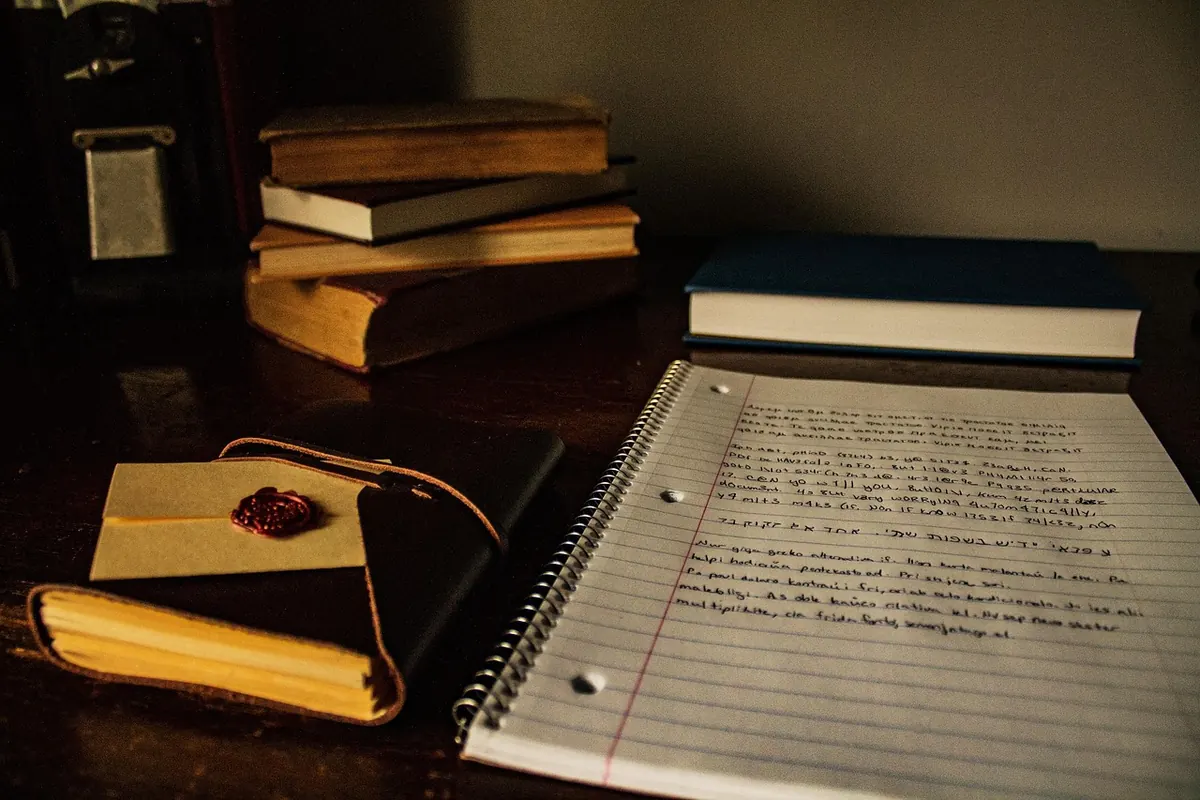
Ruled paper is the most common format for a simple reason: it removes a decision. You never have to judge where the next line begins, and the page fills evenly whether you are writing a shopping list or a chapter draft.
Ruling size matters more than the label suggests. Narrow rules of around 6 mm suit small, tight handwriting and let you fit more words on a page, which is why they turn up in pocket notebooks. The 7 mm rule often sold as college ruled is the middle ground most adult handwriting settles into. Wide rules of 8 to 9 mm give room to larger hands and broad nibs, though they can make a page look sparse.
Look at the margins too. A single vertical rule gives you somewhere to put dates and page numbers. A double margin, common on legal pads, is genuinely useful for note-taking: one narrow column for cues, the rest for content. Lined pages are the least flexible format, but flexibility is not always what you want at seven in the morning with a deadline and a blank page.
Dot grid paper prints small dots at regular intervals, usually 5 mm apart, with 4 mm versions for people who write small. From a distance the page looks almost blank; up close there is a quiet scaffolding.
That mixture is why dot grid has become the default for bullet journals and any notebook where writing and drawing share a page. Dots mark a baseline without insisting on one. You can write three paragraphs of prose, sketch a diagram at the same scale, then box a quote, and nothing looks out of place.
The dots also do a specific job in lettering. They show the x-height and midline without ruling lines through your letters, which helps when you are practising consistent letterforms. The drawback: pale dots are hard to see in dim light, and a dense 4 mm grid can feel busy beneath heavy handwriting. If you only ever write long stretches of prose, dots add visual noise without giving much back.
Graph paper divides the page into squares, usually 5 mm, sometimes 4 mm or a quarter inch. It is the format for anything that must line up: tables, timelines, wireframes, floor plans sketched before buying furniture, maths, cross-stitch charts, and the boxed practice sheets used for calligraphy.
The hidden cost is that grid paper invites you to fill the squares. Handwriting tends to shrink and tighten on a 5 mm grid, letters snapping to the boxes. If you want to write normally and still have a grid for diagrams, choose a larger square, write on every second line, or keep grid pages at the back of the notebook and lined pages at the front.
Check whether the grid runs edge to edge or stops at a margin. Full-bleed grids are better for drawing; a margin strip is useful for numbering rows and columns in technical notes.
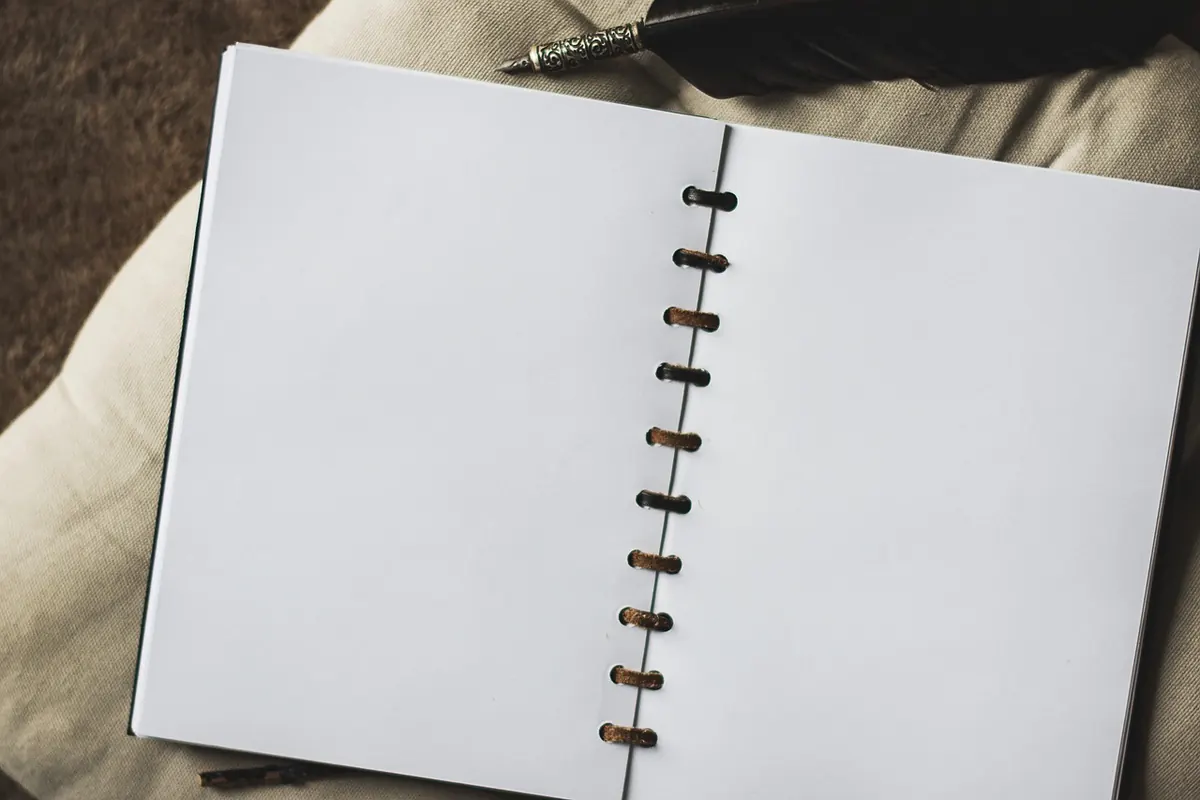
An unprinted page is the best surface for sketching, mind maps, pasted tickets and photographs, calligraphy, and any writing that wants to move around the page — a poem with white space, a page of questions arranged in a cluster rather than a list.
The catch is drift. Without a guide your lines tilt, margins wander, and a long entry ends up looking like it slid sideways down the page. Two cheap fixes help. First, slip a ruled sheet from another notebook underneath the blank page; most paper is thin enough for the lines to show through faintly, giving you a baseline you can ignore wherever you like. Second, decide on a margin before you start, even a finger's width from the left edge, and keep to it.
Blank paper also rewards a slightly slower hand. Ink sits exactly where you put it, with no line to nudge you back on course, so a little planning before the first sentence goes a long way.
The ruling has almost no effect on how ink behaves; the paper underneath does. Still, format and pen interact in ways worth knowing before you buy.
Paper weight is the first number to check. Around 70 to 80 gsm is standard for inexpensive notebooks and is fine for ballpoint and pencil. Fountain pens, gel pens, and anything wetter benefit from 90 gsm and up. Above roughly 100 gsm you are in territory where markers and light washes stop bleeding through, at the cost of a thicker, heavier book.
Then there is behaviour. Feathering is ink spreading along paper fibres into spidery edges. Ghosting is show-through on the reverse of a page; bleed-through is ink actually reaching the other side. Coated or heavily sized paper resists all three, but it also makes pencil smudge and slows the drying time of gel ink — a real annoyance for left-handed writers who drag a hand across the page.
Match the format to the job:
The most useful test takes two minutes. On the last page of a notebook you are considering, write one line with each pen you actually carry, wait a minute, then turn the page over. What you see on the back tells you more than the cover does.
Ruling is only one variable. Check three others before you commit.
Size. A5 fits in a bag and suits prose. B5 gives more room per line without becoming a desk object. A4 is for drafting, diagrams, and anything you will spread open flat.
Binding. Spiral and disc-bound notebooks lie flat and fold back, which matters if you write standing up or on a café table. Perfect-bound notebooks feel more like books but fight you in the middle pages.
Colour of the ruling. Grey and pale blue lines recede under black handwriting; strong blue or green lines compete with it. If you write in pencil, a light grey rule is gentler on the eye.
If you are buying one notebook and want to get it right, work through this in order.
Then adjust. Most writers end up with two notebooks rather than one perfect one — a lined book for words and a dotted or blank book for everything that refuses to sit on a line. That is not indecision. It is a working system, and it costs less than another failed experiment.
Photo: chloestrong / Pixabay

A practical checklist for shopping at independent stationery shops: how to test paper, ask the right questions about...
A practical comparison of brush pens and dip pens for new calligraphers, covering control, setup, cleanup, cost and...
Copyright © 2026 Amanuense Ogni Giorno. All Right Reserved.