How to Shop at an Independent Stationery Store: A Paper Lover's Checklist
October 31, 2026 - Stationery

October 22, 2026 - Daily Practice

The bell above the door, the narrow aisle, the wall of notebooks arranged by size rather than by brand. Independent stationery shops reward a certain kind of browsing: slow, hands-on, a little nosy. They can also punish it. Twenty minutes in, you are holding a notebook with lovely paper that turns out to be all wrong for the pen you use every day, or a refill that fits nothing you own.
A short checklist makes the difference. It keeps you from buying the same three things twice, helps you test what matters before you commit, and turns a pleasant wander into a purchase you are still glad about six months later.
Before you leave the house, look at what you actually write with. Not what you meant to write with last January. The pen that lives in your bag, the notebook that is three-quarters full, the pad by the phone. Those are your references.
Bring three things with you:
It also helps to know the size you like in numbers. A5 is roughly half a sheet of A4 and fits in most bags; A6 is pocket-sized; B6 and slim formats sit in between and are worth holding in your hand rather than imagining. If you have been happy with a particular ruling width, measure it with a ruler before you go. Six millimetres, seven, eight: the difference sounds trivial on paper and feels enormous when you are writing a page of notes.
Open the notebook to the middle, not the first page, and look at the paper at an angle to the light. You are checking for show-through from the other side, for a greyish cast that suggests thin stock, and for a surface that looks slightly furry. Paper with visible tooth is not a flaw; it is a preference. It grabs pencil beautifully and can make a fine nib feel scratchy.
Most independent stationers keep a tester copy of the notebooks they stock, or will let you write a line on the inside cover of a shop copy. Ask. Writing two lines with your own pen is worth more than any description on the cover. Use a real sentence rather than a squiggle, because a sentence shows you how the paper handles pressure, speed and the ink pooling at the end of a stroke.
Give the ink thirty seconds, then turn the page. Feathering is the ink spreading into fuzzy edges, which usually means the paper is too absorbent for a wet pen. Bleed-through is ink reaching the reverse side in a way you can see clearly, which limits you to one side of the sheet. Ghosting is a faint shadow of your writing, tolerable in a personal journal and annoying in a notebook you photograph or scan. Decide which of the three you can live with before you fall for a cover.
This is where shop staff earn their keep. Independent stationers tend to know their stock in detail, and a good question gets a better answer than a browse. Try some of these:
If you use pencil, say so. Pencil wants texture. If you use a gel pen that lays down a lot of ink, say that too. The right question is never “Is this good paper?” but “Is this good paper for this pen?”
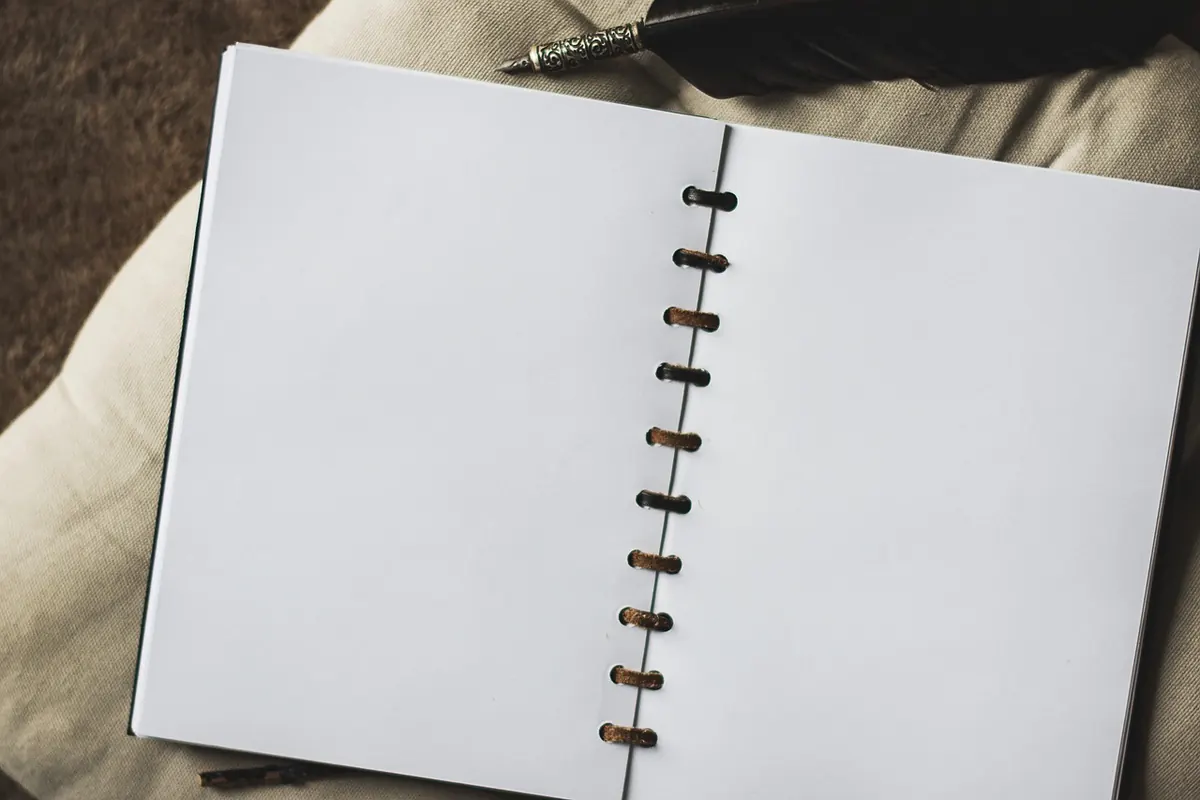
Paper is only half the notebook. Check whether the book lies flat when open; a glued spine that fights you will make the notebook irritating by page forty. Look for sewn signatures if you plan to write across a spread, and for perforated pages if you tear sheets out. Check the margin: some notebooks leave almost none, which is fine for lists and miserable for dated entries.
Then check the ruling against your handwriting. If your letters are small, a wide rule wastes half the line. If you write large, a narrow rule will cramp you into two lines per thought. Dot grid spacing matters in the same way, and a five-millimetre grid is a very different tool from a four-millimetre one when you are drawing boxes. Hold the notebook open at the middle and imagine your last week of notes in it. That mental test catches more bad purchases than any review.
Independent shops cannot compete on volume, so buy the things where their knowledge and curation actually help you.
What to leave on the shelf: bulk notebooks you can buy anywhere for less, anything you are buying because the cover is charming and you have no use for it, and duplicate supplies you already own three of. Ask about the return policy before you write in anything, since a used notebook is rarely returnable.
Tell them what you did not like about your last notebook. “The paper feathered with my fountain pen” is a useful sentence, and it will usually get you pointed at three alternatives instead of forty. Ask whether they can order a specific size or ruling. Ask whether they keep a paper sample book behind the counter. Independent shops survive on regulars, and a customer who asks good questions is a customer they remember.
Run through those seven questions at the counter and you will leave with less, use more of it, and know exactly which shop to return to.
Photo: kaboompics / Pixabay
A practical comparison of brush pens and dip pens for new calligraphers, covering control, setup, cleanup, cost and...
A seven-day autumn writing plan with daily prompts, short exercises and reflection questions — enough structure to...
Copyright © 2026 Amanuense Ogni Giorno. All Right Reserved.