How to Shop at an Independent Stationery Store: A Paper Lover's Checklist
October 31, 2026 - Stationery

October 22, 2026 - Daily Practice

A writing desk does not need to be beautiful. It needs to be quiet — quiet to the eye, quiet to the hand, quiet enough that starting the next sentence is easier than reaching for the next distraction.
Most sessions that fall apart in the first ten minutes were lost before they began. You sit down, reach for a pen that rolled behind the monitor, notice the lamp throwing your own shadow across the page, pick up the phone to check the time, and whatever small momentum you arrived with is gone. The fix is not more willpower. It is a desk set up on purpose, once, so the room stops asking questions. Here is the checklist I would hand anyone building a place to write.
Empty the desk completely. Not tidy — empty. Put everything in a box on the floor and bring back only what earns its place during an actual writing session. Most of us are surprised by how little that is.
What comes back: the surface you write on, the thing you write with, and whatever holds the work in progress — a notebook, a printed outline, a single index card. Everything else is scenery, and scenery is what your eyes visit when a sentence gets difficult.
Things that stay in the box:
Leave one small empty area beside your writing hand. It becomes the landing zone for keys, glasses, a coaster. Clutter migrates; give it somewhere to migrate to.
Lighting is the item people fix last and regret most. Put a lamp directly in front of you and you will spend the session leaning around your own shadow, because your hand sits between the bulb and the page. Move the light to the side — opposite your writing hand if possible — and the shadow moves out of the way with it.
Hold a pen over the page and look at the shadow. If it falls across the words you just wrote, the lamp is in the wrong place. Adjust the arm, not your posture. This takes five seconds and saves you an hour of squinting.
A window is the best light source in the house and the worst place to sit facing. Work perpendicular to the glass: daylight comes in over your shoulder or across the desk, and you are not staring into a bright rectangle while a dim screen stares back. If you write on a screen, tilt it until the reflection of the lamp disappears. Glare is a small tax you pay on every line.
A single adjustable lamp plus overhead light that does not buzz is enough for most rooms. Aim for the page to be the brightest thing in your field of view, apart from the window itself.
Writing tools are the most enjoyable form of procrastination available. You do not need a system. You need a pen you like, paper that does not fight you, a timer, and water.
One pen, in a fixed spot, not a cup of eleven. If you write by hand for long stretches, a pen that flows without pressure matters more than the brand. Test it on the actual paper you use; fast ink and thin paper are a bad marriage, and you will blame your handwriting for the smudges.
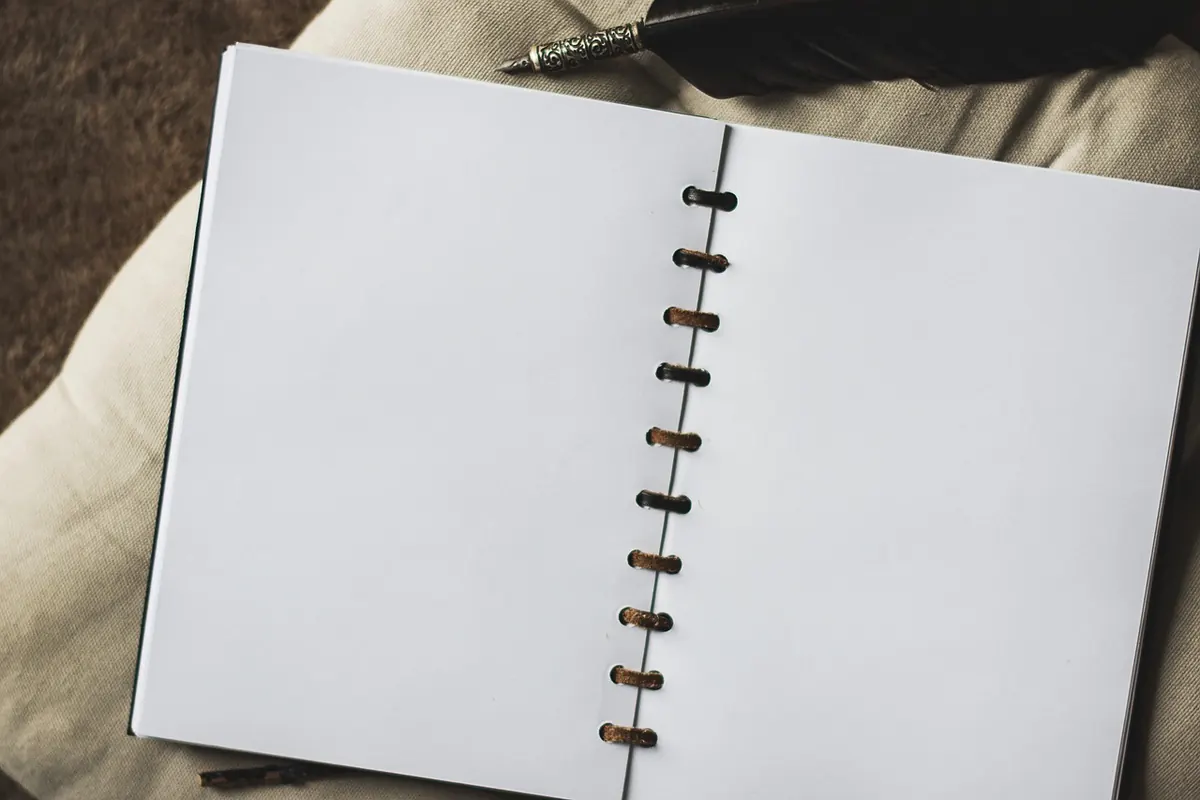
A notebook with a binding that lies flat is worth more than a beautiful one that snaps shut. Keep the first page for a running list of things you remembered mid-sentence and refused to chase. That list is doing real work: it lets you park a thought without leaving the paragraph.
A physical timer beats a phone timer, for reasons the next section explains. Set it for twenty-five minutes or forty. The number matters less than the fact that it is not sitting on the same device as your messages.
Face down is not enough. Silent is not enough either, if it is close enough that you can feel it buzz against the wood. The phone belongs in another room, or at minimum in a drawer behind you that requires standing up to open.
If you use it for music, start the music before you sit down and leave the phone where it is. If you use it as an alarm, buy a cheap timer instead. If you genuinely cannot move it — a sick child, a job on call — turn it face down at the far end of the room and state the rule out loud: you will check it between sessions, not during them.
The point is not purity. The point is that reaching for the phone should cost you a decision and a movement, not a reflex. Distance is the cheapest form of discipline there is.
Chair height: feet flat, thighs roughly level, wrists not bent up at the keyboard or curled over a notebook that sits too low. A stack of books under the monitor beats a sore neck by Thursday. Keep the room a degree or two cooler than comfortable, and let the air move.
Then the social details. A closed door is a sentence; an open one is an invitation. Tell the people you live with what a closed door means and for how long, and give them a time when interrupting is welcome. Water within reach, so thirst does not become an excuse to leave the room. Sound is personal — some writers need silence, others need a steady wash of noise with no words in it. Test both for a week. Lyrics are the problem, not volume.
Run this once properly, then again at the start of each session. The second version takes about ninety seconds.
The test of a writing desk is simple: if a stranger sat down at it, what would they think the job is? A table with a notebook, a lamp, and a timer says write. A desk with a mail pile, three devices, and a half-finished cup of coffee says deal with things. You want the first one, and you want it to say the same thing every morning.
It will not stay perfect. Papers arrive, mugs accumulate, the pen wanders. What matters is that resetting it takes ninety seconds rather than a lost afternoon. End each session with a small ritual: close the notebook, put the pen in its place, leave the phone where it was, and push the chair in. Tomorrow's session then starts with the desk already on your side, which is a quieter and more reliable advantage than motivation has ever been.
Photo: Markus Spiske / Pexels

A practical checklist for shopping at independent stationery shops: how to test paper, ask the right questions about...
A practical comparison of brush pens and dip pens for new calligraphers, covering control, setup, cleanup, cost and...
Copyright © 2026 Amanuense Ogni Giorno. All Right Reserved.